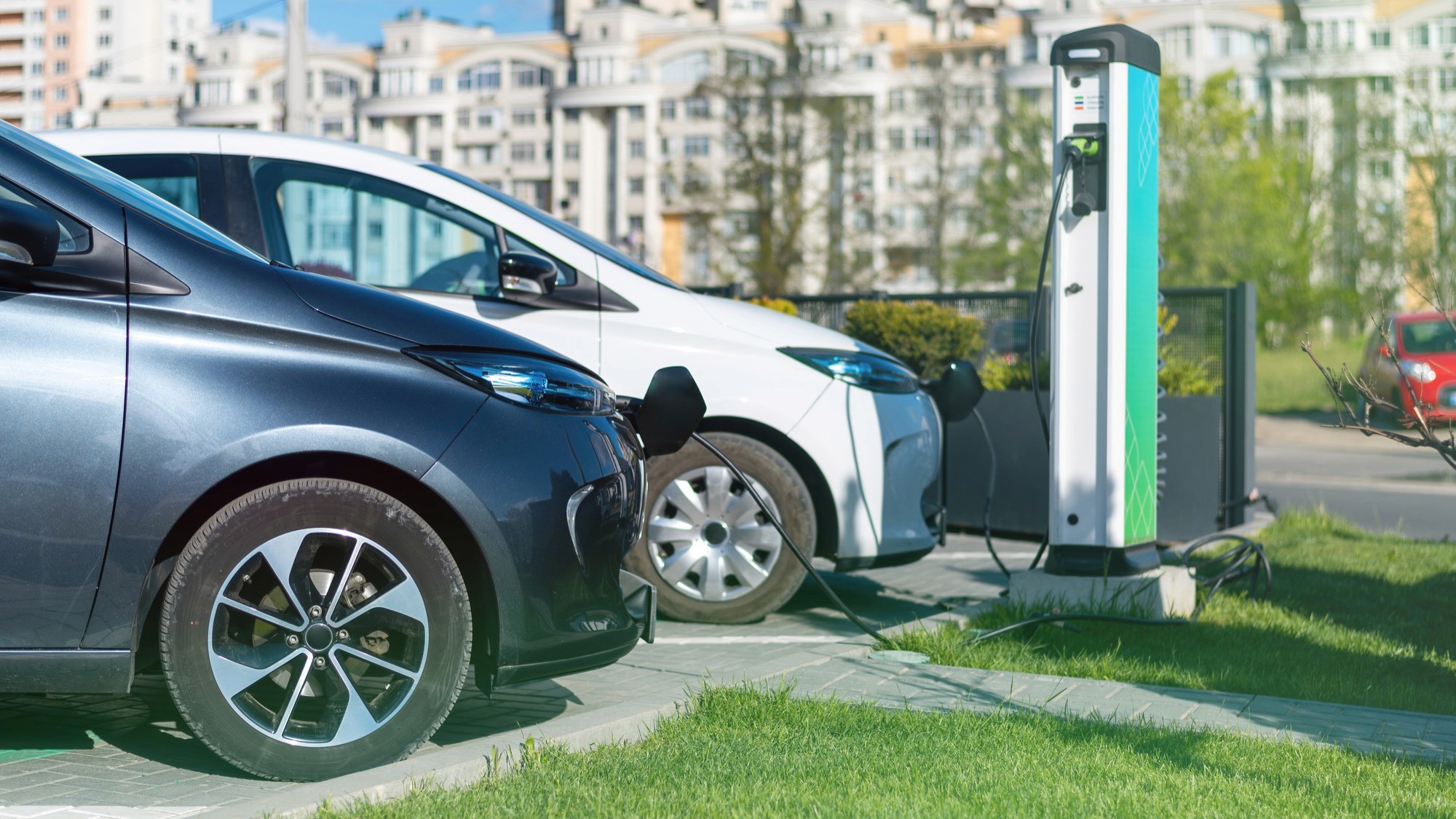
EV market growth in India has picked up quite a bit over the last few years, with adoption gradually expanding across vehicle segments. What once felt like a future-facing category is now starting to find a place in everyday mobility, supported by policy push, rising fuel costs, and a growing range of electric vehicles entering the market.
But beyond the numbers, there’s a more meaningful shift underway. The conversation is moving from awareness to practicality. Consumers are no longer just curious about EVs, they’re starting to evaluate whether these vehicles fit into their daily lives, how reliable they are, and whether they make sense over time. This shift is also closely tied to evolving consumer insights on EV adoption in India, where expectations are becoming more defined.
That shift is also beginning to influence how businesses look at this space, where demand is coming from, what’s driving decisions, and how the market could evolve from here.
In this blog, we take a closer look at industry growth, consumer insights, and survey-backed trends shaping EV adoption in India.
1) EV Market Growth in India: What the Latest Data Shows
If you look at how the EV market growth in India has unfolded recently, it’s clear that things are moving faster than they were even a few years ago. The shift has been quite noticeable between 2022 and 2026, with adoption picking up across segments and no longer limited to early adopters, reflecting broader EV growth in India across the market.
The long-term outlook also reflects that momentum. According to Fortune Business Insights, India’s EV market is projected to reach around $17.8 billion by 2032, growing at nearly 19% annually, reflecting steady expansion across both passenger and commercial segments and giving a clearer sense of the scale this opportunity is building toward.
In the near term, the numbers are starting to back that up. Sales trends are also showing a similar pattern. Data reported by Economic Times shows that electric car registrations touched 19,711 units in March 2026, up 49% year on year. Part of that increase was influenced by pricing changes and policy expectations earlier in the year, but it still points to EV demand in India building at a steady pace.
At the same time, not every segment is moving in the same way. Two-wheelers continue to lead in terms of volume, while passenger EVs are growing faster in percentage terms. So while the overall market is expanding, different parts of it are evolving at their own pace.
Taken together, this doesn’t just look like early-stage growth anymore, it feels more like a market that’s starting to find its footing.
2) How Consumer Thinking and Survey Trends Are Shaping EV Adoption
If you move away from the numbers for a moment, the bigger shift is actually in how people are starting to look at EVs, and that’s where a lot of recent survey findings start to line up with what’s happening on the ground, especially when you look at broader EV consumer behavior India analysis.
Interest is definitely growing, but it’s no longer driven by curiosity alone. Recent industry surveys suggest that a growing share of Indian consumers are open to considering EVs for their next purchase, showing that the market is moving beyond early adopters and into a broader consideration set.
At the same time, that interest is still measured. Surveys consistently point to a few key concerns, charging access, range reliability, and upfront cost, as the main reasons some buyers are still holding back. These continue to shape the overall pace of EV adoption in India, even as awareness improves.
That becomes clearer when you look at how people are making decisions. It’s less about first impressions and more about everyday practicality, whether an EV fits into daily routines, how easy it is to charge, and whether it makes sense over time. There’s also a noticeable shift toward thinking in terms of total cost of ownership, rather than just upfront pricing.
As highlighted by ET Edge Insights, India’s EV transition is likely to depend more on consumer trust than fleet-driven demand, which ties directly into what these survey trends are showing.
This also means that adoption is likely to move at a more measured pace, shaped less by hype and more by how well these everyday concerns are addressed.
3) Policies and Incentives Supporting EV Market Growth
A big part of how the EV market growth in India has taken shape comes down to policy, but more importantly, how that policy has been evolving over time. It hasn’t been a one-time push. Instead, different schemes have gradually nudged the market forward, first by making EVs more affordable and then by building the ecosystem around them.
The introduction of PM E-DRIVE in 2024, with an outlay of around ₹10,900 crore, reflects a shift toward scaling the market in a more structured way and highlights the broader EV market analysis behind current policy direction. What’s interesting is how closely consumer behavior still tracks these policy signals.
The spike in EV sales in March 2026, for instance, wasn’t just about rising demand, it was also influenced by discounts, expected price changes, and uncertainty around subsidies. In other words, policy isn’t just shaping adoption, it’s also shaping when people decide to buy, something that continues to influence overall EV buyers India sentiment.
Earlier efforts laid the groundwork for this. Under FAME-II (extended until 2024), about ₹912.5 crore was allocated for public charging infrastructure, helping address one of the early barriers to adoption and strengthening the broader EV industry India ecosystem.
As the market matures, the role of policy is also shifting. It’s moving from driving early demand to creating stability, reducing uncertainty for both consumers and businesses, and making the market a little more predictable to navigate.
4) Charging, Ownership Experience, and What Builds Buyer Confidence
Alongside policy support and growing interest, the conversation around EVs almost always comes back to charging, because this is where the shift from interest to actual ownership starts to feel real. The network has expanded steadily over the past few years, with India crossing 10,000 public charging stations by 2024, and more being added through a mix of government programs and private investment.
On paper, that reflects clear progress and a system that is gradually taking shape, though it also highlights ongoing EV charging infrastructure challenges India consumers continue to navigate. But the experience on the ground doesn’t always match that pace. In urban areas, charging is becoming easier to work around, especially for people who can rely on home charging or have access to nearby stations.
Beyond that, it can still feel inconsistent, not just in terms of availability, but whether a charger is actually usable when needed, how long it takes, and how easily it fits into a daily routine without extra planning. These gaps are closely tied to the broader electric vehicle ownership experience India insights, where convenience plays a key role. That’s where the hesitation tends to come from. For many buyers, the question isn’t whether infrastructure exists, but whether it feels dependable enough to rely on.
The real gap isn’t just availability, it’s predictability, something that continues to influence overall EV insights India as adoption grows. Until that gap closes, charging will continue to play a central role in shaping both confidence and long-term adoption.
5) Key Business Signals Emerging from EV Market Growth
For businesses, the future of EV market growth in India will depend not just on how fast the market expands, but on how demand continues to evolve. Growth is not uniform. Electric two-wheelers have already reached scale, with sales crossing 1.4 million units in FY26, according to Economic Times, reflecting strong electric two-wheeler adoption trends India, while passenger EVs are emerging as a high-growth segment.
This shows that opportunity is spread across different parts of the market, not concentrated in just one. Looking ahead toward 2030, EV adoption is expected to accelerate further, gradually becoming a more mainstream part of the automotive landscape. This also points to broader EV market opportunities in automotive sector, especially as new players and investments continue to enter the space.
As survey trends suggest, buyers are becoming more practical in their approach. They’re comparing options more closely, thinking about long-term value, and paying attention to the overall ownership experience, reinforcing evolving EV demand trends India.
In many ways, the advantage may not come from being first, but from being more aligned with what consumers actually need, whether that’s better charging access, clearer pricing, or a more reliable ownership experience.
Conclusion
The EV market growth in India has come a long way in a relatively short time, but what’s more interesting is how the conversation around it is changing. It’s no longer just about growth or new launches. It’s about how well EVs fit into everyday use, how reliable they feel, and whether they make sense in the long run.
A lot of that comes down to what consumers are actually experiencing and expecting. Survey trends and on-ground behavior both point in a similar direction, buyers are taking a more practical view, weighing convenience, cost, and overall ease of ownership before making a decision.
At the same time, policy support, improving infrastructure, and wider availability are helping move things forward, even if adoption still feels gradual in parts.
Put together, the market isn’t just expanding, it’s settling into a more realistic phase where decisions are more considered and expectations are clearer.
For businesses, that makes it important not just to follow the trend, but to understand what’s shaping it. To explore how these shifts could impact your business, contact us. At Market Xcel, we help turn market developments into actionable insights that support better decisions and long-term growth.